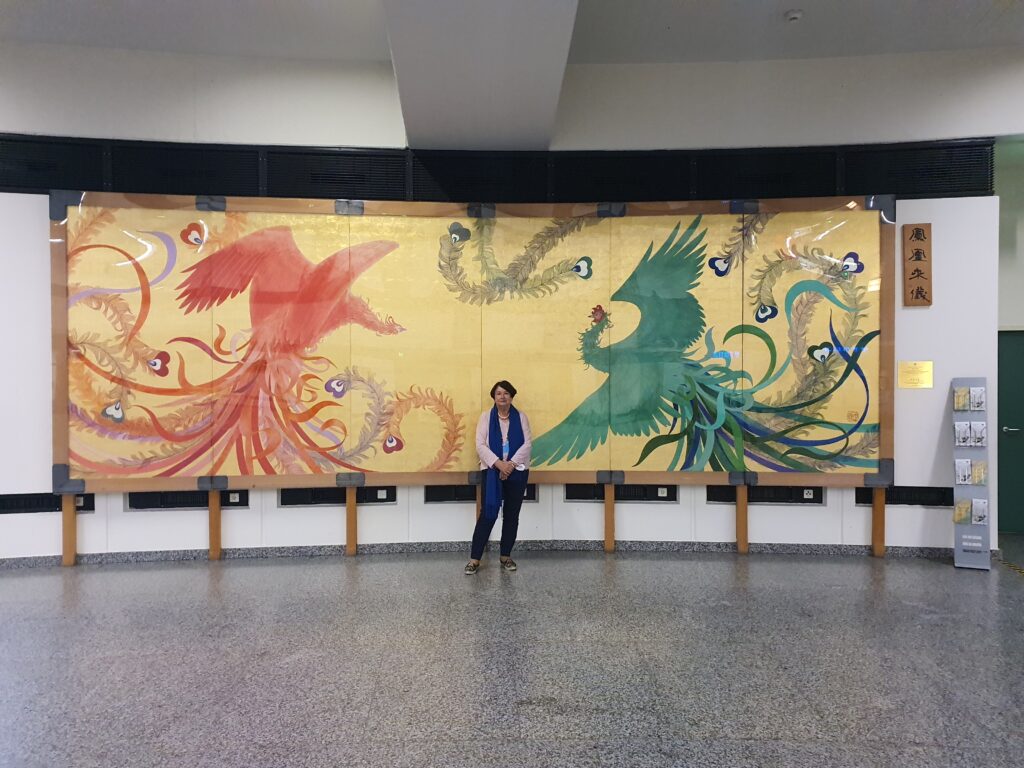
Sagenji Yoshida’s “Ho-o Raigi” and the Intercultural Legacy of His Art in the United Nations Perspective
A Gift for Peace and Justice
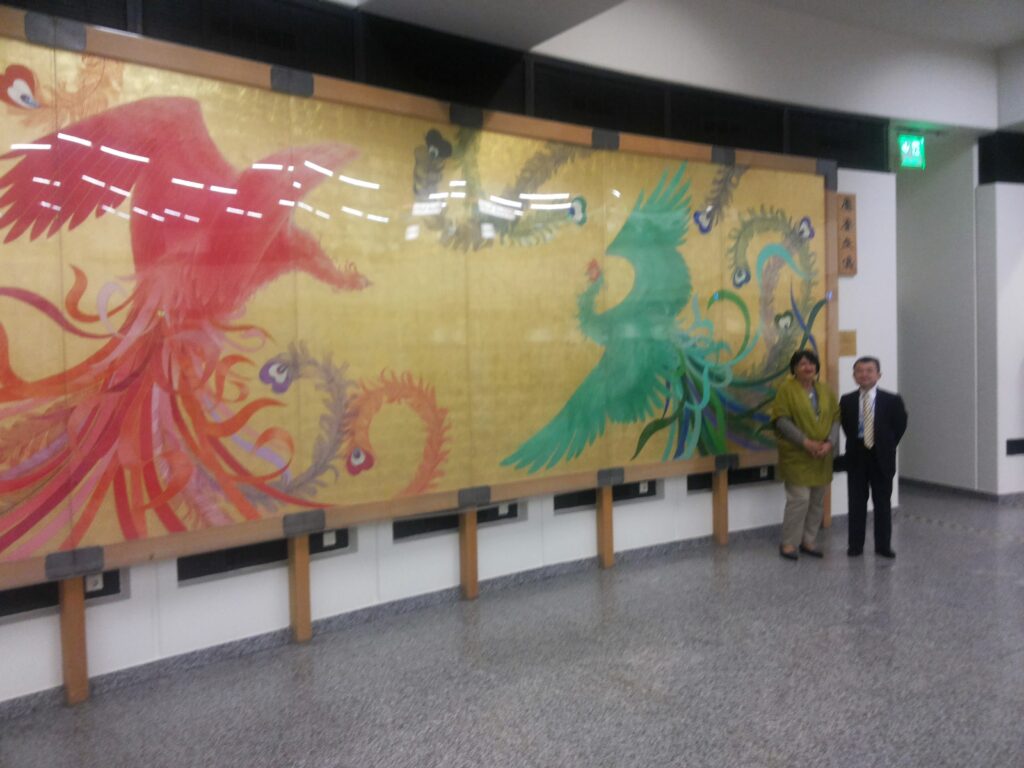
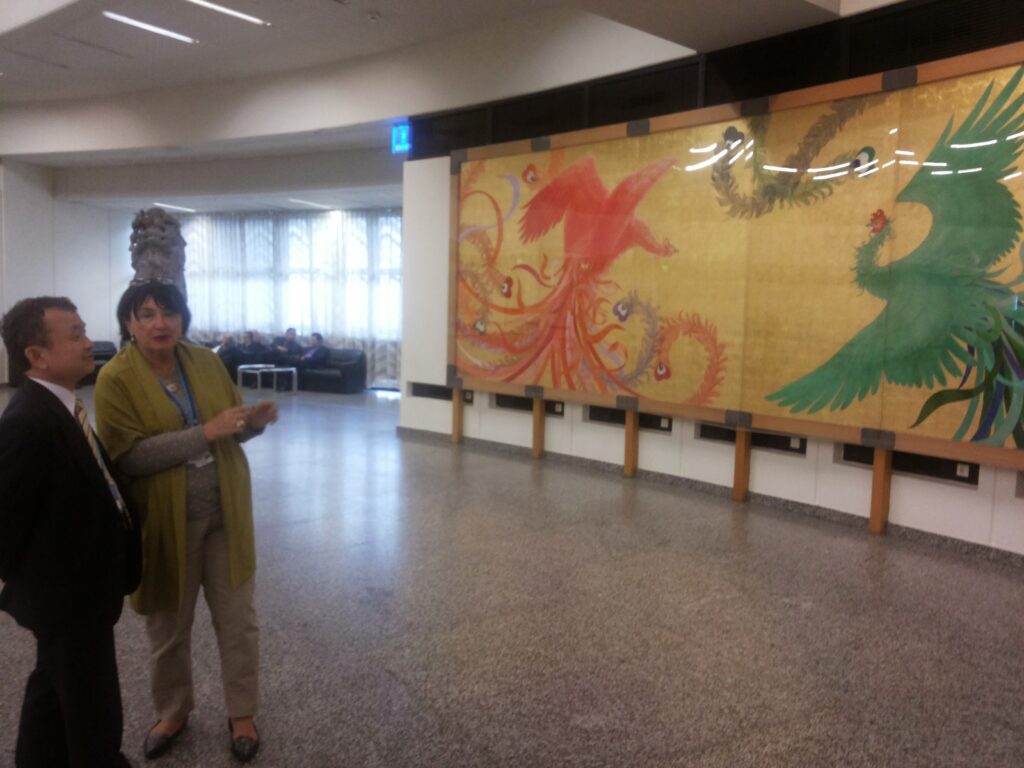
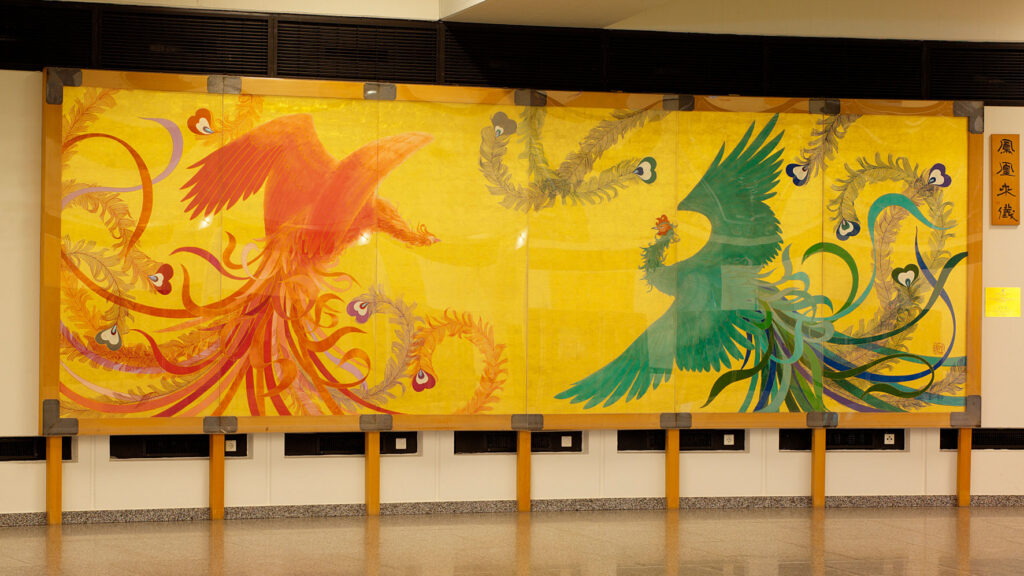
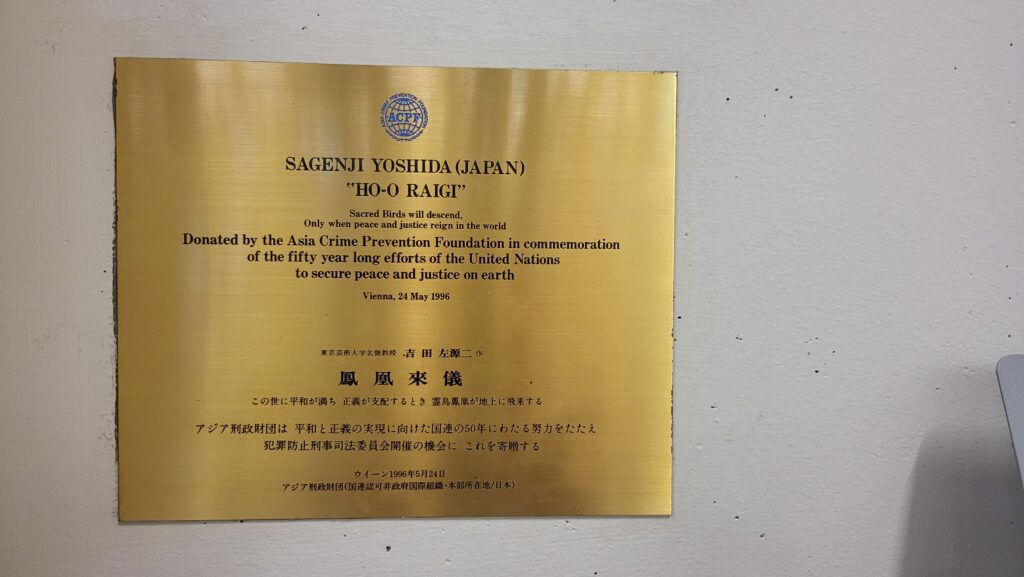
The monumental painting “Ho-o Raigi” (“The Holy Birds”) by Sagenji Yoshida, donated by the Asia Crime Prevention Foundation (ACPF) to the United Nations Office in Vienna in 1996, stands as a powerful symbol of peace, justice, and international understanding. Measuring 2.4 metres high and 7.2 metres wide, and depicting the mythical Ho-o (phoenix) birds, the artwork occupies a prominent position at the entrance of the UN Rotunda, welcoming visitors from around the world and encouraging them to reflect on the United Nations’ enduring mission: the realisation of peace and justice among all peoples.
This painting was immortalised in the 1997 United Nations Postal Administration series, marking the first time a Japanese painted work appeared on UN stamps—a fitting tribute to its cultural and diplomatic significance. The Ho-o phoenix is rich in symbolic meaning in East Asian tradition, said to emerge only during times of peace and virtue. By gifting this painting to the UN for its 50th anniversary, the ACPF and Yoshida made tangible both hope and global responsibility. bound up in these ideals.
The Life and Artistry of Sagenji Yoshida
Sagenji Yoshida was born in Aki City, Kochi Prefecture, Japan, in 1925. He graduated from the Tokyo Art School (now Tokyo University of the Arts) and later became Professor Emeritus at the Tokyo National University of Fine Arts and Music. Yoshida was renowned not only as a painter but also as a designer — his creative vision encompassing graphic design, academic work, and public monuments.
Yoshida’s biography highlights intercultural exploration. He studied Islamic design in Egypt, Italy, and France as an overseas research fellow, gaining unique insights into Middle Eastern and European artistic traditions. This diverse background enabled Yoshida to blend Eastern and Western motifs, most notably reflected in the intricate composition and harmonious symbolism of his work.
Intercultural Versatility in Yoshida’s Oeuvre
Yoshida’s art embodies an ongoing dialogue between cultures and civilisations:
Iconography and Symbolism: The Ho-o birds of “Ho-o Raigi” are not merely decorative. They blend the Buddhist-influenced symbolism of the sacred phoenix with universal themes of renewal, justice, and peace—resonating with global audiences and the United Nations’ own ethos.
Cultural Mediation: Through exhibitions, public installations, and international collaborations, Yoshida’s art has served as a bridge, fostering greater understanding between Japan and the global community. The inclusion of “Ho-o Raigi” in the UN’s permanent collection and its reproduction on commemorative stamps emphasise how art can transcend national borders and become a tool of diplomacy.
Lasting Value and Global Significance
The value of “Ho-o Raigi” lies not simply in its aesthetic magnificence or technical mastery, but in the ideals it enshrines: